Sosialisasi minuman probiotik berbasis nanas sebagai pangan fungsional dalam mendukung edukasi kesehatan masyarakat
Community Outreach on Pineapple-Based Probiotic Beverage as a Functional Food to Support Public Health Education
DOI:
https://doi.org/10.46549/igkojei.v7i3.658Keywords:
Health education, Functional food, Pineapple, Probiotics, TepacheAbstract
ABSTRACT
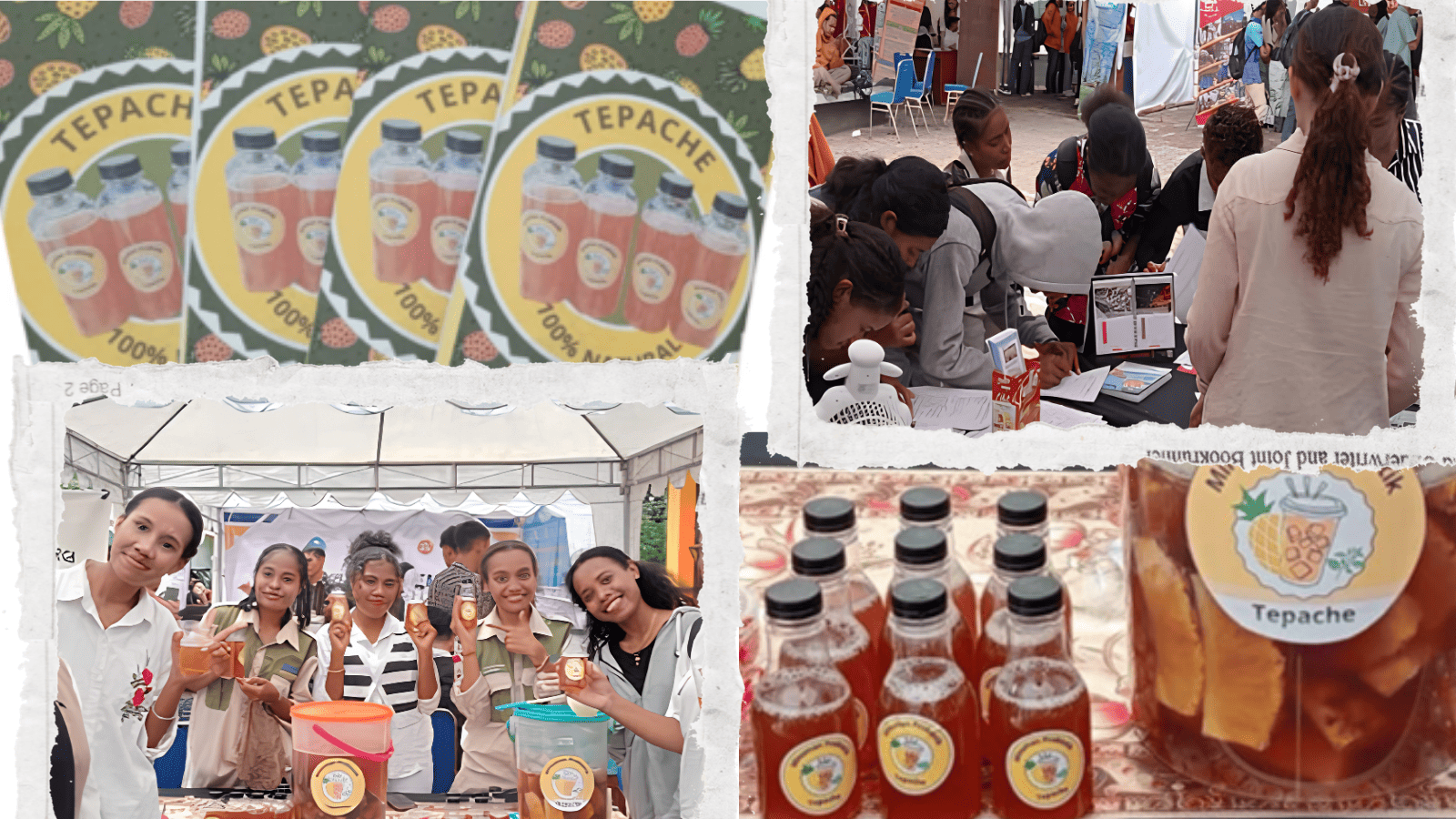
The utilization of functional foods based on local resources is an important strategy to support community health improvement. Pineapple has strong potential to be developed into a probiotic beverage through a simple fermentation process. This community service activity aimed to enhance public knowledge and awareness of pineapple-based probiotic beverages as functional foods supporting health education. The program was conducted through socialization and health education during the Universitas Papua Education Exhibition on 27 October–2 November 2025, involving 100 participants consisting of students, lecturers, teachers, and the general public. Activities included material presentation, introduction to fermented pineapple beverage (tepache), demonstration of the production process, and distribution of educational leaflets, followed by evaluation using participant response questionnaires. The results showed a very high level of perceived usefulness (89.50%), indicating increased knowledge, interest, and awareness regarding the use of pineapple as a probiotic beverage. It can be concluded that this activity was effective in improving community health literacy and has potential to support the sustainable development of local functional foods.
Keywords: Functional food; Health education; Pineapple; Probiotics; Tepache
ABSTRAK
Pemanfaatan pangan fungsional berbasis sumber daya lokal merupakan salah satu strategi untuk mendukung peningkatan kesehatan masyarakat. Nanas berpotensi dikembangkan sebagai bahan baku minuman probiotik melalui proses fermentasi sederhana. Kegiatan pengabdian kepada masyarakat ini bertujuan meningkatkan pemahaman dan kesadaran masyarakat mengenai minuman probiotik berbasis nanas sebagai pangan fungsional pendukung edukasi kesehatan. Metode yang digunakan adalah sosialisasi dan edukasi kesehatan yang dilaksanakan pada Pameran Pendidikan Universitas Papua tanggal 27 Oktober–2 November 2025 dengan melibatkan 100 peserta dari kalangan mahasiswa, dosen, guru, dan masyarakat umum. Kegiatan meliputi penyampaian materi, pengenalan minuman fermentasi nanas (tepache), demonstrasi pembuatan, serta pembagian leaflet, yang dievaluasi melalui angket respon peserta. Hasil menunjukkan tingkat kebermanfaatan yang sangat tinggi (89,50%), mencerminkan peningkatan pengetahuan, minat, dan kesadaran peserta terhadap pemanfaatan nanas sebagai minuman probiotik. Kegiatan ini disimpulkan efektif dalam meningkatkan literasi kesehatan masyarakat serta berpotensi mendukung pengembangan pangan fungsional lokal secara berkelanjutan.
Kata kunci: Edukasi kesehatan; Nanas; Pangan fungsional, Probiotik; Tepache
Downloads
References
Amini A, Ramezani M, Hamidi-Esfahani Z. 2021. Bromelain: Properties and therapeutic applications. Food Science and Nutrition. 9(8); 5139–5154. https://doi.org/10.1002/fsn3.2456
Astuti D, Lestari P, Handayani S. 2023. Characterization of fermented pineapple beverage as a potential probiotic drink. Journal of Food Science and Nutrition. 11(2); 85–93. https://doi.org/10.26555/jfsn.v11i2.2023
Astuti FHR, Widodo P, Lestari S. 2023. Antioxidant activity and organoleptic quality of probiotic tepache made from pineapple peel (Ananas comosus). Proceedings of the International Conference on Biology Education, Natural Science, and Technology. 6(1); 245–252.
Badan Pusat Statistik Papua Barat. 2023. Papua Barat dalam Angka 2023. Badan Pusat Statistik Papua Barat, Manokwari.
Chairattanaphanich P, Saraphirom P, Thancharoen K, Khongsri K, Phonphuak S, Hongsaprabhas T. 2024. Screening and characterization of lactic acid bacteria in modified tepache using local raw materials. Life Sciences and Environment Journal. 25(2); 485–500. https://doi.org/10.14456/lsej.2024.35
Escobar-Zepeda A, Sanchez-Flores A, Quirasco-Baruch M, Navarro-Cruz AR, Ponce-Alquicira E, Eguiarte LE. 2022. Microbial community structure, physicochemical characteristics and predictive functionalities of the Mexican tepache fermented beverage. Microbiological Research. 259; 127045. https://doi.org/10.1016/j.micres.2022.127045
Hossain MF, Akhtar S, Anwar M. 2021. Nutritional value and medicinal benefits of pineapple (Ananas comosus). Food Research International. 142. https://doi.org/10.1016/j.foodres.2021.110125
Kilmaskossu JP, Nebore IDY, Rumalolas N, Iwan, Sirait SHK, Erari SS, Tuririday HT, Yohanita AM, Wambrauw HL, Pramudita W, Luarwan JR, Manihuruk DLD, Resilay EM, Wanaha FG, Rumatan S, Sawor YS, Ayomi C, Kambu AY, Sangkek NT, Dewi NFK, Hanafi RIAA, Rimosan MFBRR, Apriyani R, Tagi F, Wabia H. 2025. Edukasi pengolahan limbah kulit buah menjadi eco-enzim bagi masyarakat di Desa Petrus Kafiar. IGKOJEI: Jurnal Pengabdian Masyarakat. 6(2); 117–125. https://doi.org/10.46549/igkojei.v6i2.551
Knowles MS, Holton EF, Swanson RA. 2020. The Adult Learner: The Definitive Classic in Adult Education and Human Resource Development. Edisi ke-9. Routledge. https://doi.org/10.4324/9780429299612
Marco ML, Sanders ME, Gänzle M, Arrieta MC, Cotter PD, De Vuyst L, Hutkins R. 2021. The International Scientific Association for Probiotics and Prebiotics (ISAPP) consensus statement on fermented foods. Nature Reviews Gastroenterology & Hepatology. 18(3); 196–208. https://doi.org/10.1038/s41575-020-00390-5
Mohamed NA, Jaafar RA, Ibrahim N. 2020. Pharmacological properties of bromelain: A review. Molecules. 25(20); 1–17. https://doi.org/10.3390/molecules25204778
Nuraida L. 2020. A review: Health promoting lactic acid bacteria in traditional Indonesian fermented foods. Food Science and Human Wellness. 9(4); 353–364. https://doi.org/10.1016/j.fshw.2020.08.003
Putri RA, Santoso U. 2020. Development of local functional foods to support community nutrition and micro-enterprises. Journal of Community Empowerment. 5(2); 101–109. https://doi.org/10.22146/jce.2020.52145
Putri DA, Wahyuni S, Kurniawan R. 2022. Kandungan gizi dan aktivitas antioksidan buah nanas sebagai pangan fungsional. Jurnal Teknologi Pangan dan Gizi. 21(2); 85–94.
Pyo Y, Kwon KH, Jung YJ. 2024. Probiotic functions in fermented foods: Antiviral, immunomodulatory, and anticancer benefits. Foods. 13(15); 2386. https://doi.org/10.3390/foods13152386
Rahman F, Yulianti K, Siregar M. 2022. Community-based functional food development as a strategy for sustainable local resource utilization. Journal of Sustainable Development. 15(4); 112–121. https://doi.org/10.5539/jsd.v15n4p112
Rahmawati L, Yusuf M. 2023. Fermentation technology in functional fruit beverages: Nutritional and probiotic enhancement. International Journal of Food Science. 2023; 1–10. https://doi.org/10.1155/2023/9987654
Sabira QAN, Suryani T. 2023. Glucose levels and organoleptic quality of probiotic tepache from pineapple peel. Proceedings of the International Conference on Biology Education, Natural Science, and Technology. 6(1); 198–205.
Sihombing DR. 2023. Formulation of probiotic beverage from mixed fruit juices including pineapple. Jurnal Riset Teknologi Pangan dan Hasil Pertanian (RETIPA). 5(2); 89–96.
Sugiyono. 2019. Metode Penelitian Pendidikan: Pendekatan Kuantitatif, Kualitatif, Kombinasi, R&D, dan Penelitian Pendidikan. Edisi ke-3. Alfabeta, Bandung.
Suryani E, Sabira S, Wibowo A. 2021. Utilization of local fruit resources for functional food development in Eastern Indonesia. Journal of Food and Agroindustry. 9(3); 145–154. https://doi.org/10.21776/ub.jfa.2021.009.03.4
Utami S, Widodo W, Prasetyo B. 2021. Effectiveness of community assistance models in adopting food processing innovations. Journal of Community Engagement. 6(1); 23–31. https://doi.org/10.30874/jce.2021.6.1.23
Widodo W, Hartono R, Lestari D. 2022. Community education on probiotic foods to improve public health literacy. International Journal of Community Health Education. 4(2); 67–75. https://doi.org/10.1080/ijche.2022.184567
Yuminarti U, Widati AW, Wambrauw LT, Imbiri S, Ramadhani FN. 2025. Pelatihan pengolahan minyak kelapa secara fermentasi bagi masyarakat di Kampung Mansaburi. IGKOJEI: Jurnal Pengabdian Masyarakat. 6(4); 243–249. https://doi.org/10.46549/igkojei.v6i4.603
Zhang L, Liu C, Li D, Zhao Y. 2022. Functional fermented foods and their role in improving gut health and immune function. Frontiers in Nutrition. 9; 889234. https://doi.org/10.3389/fnut.2022.889234
Downloads
Published
How to Cite
Issue
Section
License
Copyright (c) 2026 Idola D. Y. Nebore, Iwan, Nuryanti Rumalolas, Egi Purnama, Johanis P. Kilmaskossu, Jan H. Nunaki, Silvia H. K. Sirait, Jeni, Helena T. Tuririday, Aksamina M. Yohanita, Semuel S. Erari, Hengky L. Wambrauw, Suzan Hehamahwa, Naomi A. Awawata, Nirmanda Nirmanda, Stevia B. H. G. Wayoi, Enggi Palimbong, Andhika H. Abdilah, Aulia P. Rahayu

This work is licensed under a Creative Commons Attribution-NonCommercial-ShareAlike 4.0 International License.
License and Copyright Agreement
In submitting the manuscript to the journal, the authors certify that:
- They are authorized by their co-authors to enter into these arrangements.
- The work described has not been formally published before, except in the form of an abstract or as part of a published lecture, review, thesis, or overlay journal. Please also carefully read IGKOJEI: Jurnal Pengabdian Masyarakat Posting Your Article Policy at https://journal.fapetunipa.ac.id/index.php/igkojei/policy/publicationethics
- That it is not under consideration for publication elsewhere,
- That its publication has been approved by all the author(s) and by the responsible authorities – tacitly or explicitly – of the institutes where the work has been carried out.
- They secure the right to reproduce any material that has already been published or copyrighted elsewhere.
- They agree to the following license and copyright agreement.
Copyright
Authors who publish withIGKOJEI: Jurnal Pengabdian Masyarakat agree to the following terms:
- Authors retain copyright and grant the journal right of first publication with the work simultaneously licensed under a Creative Commons Attribution License (CC BY-NC-SA 4.0) that allows others to share the work with an acknowledgment of the work's authorship and initial publication in this journal.
- Authors are able to enter into separate, additional contractual arrangements for the non-exclusive distribution of the journal's published version of the work (e.g., post it to an institutional repository or publish it in a book), with an acknowledgment of its initial publication in this journal.
- Authors are permitted and encouraged to post their work online (e.g., in institutional repositories or on their website) prior to and during the submission process, as it can lead to productive exchanges, as well as earlier and greater citation of published work.

This work is licensed under a Creative Commons Attribution-NonCommercial-ShareAlike 4.0 International License.